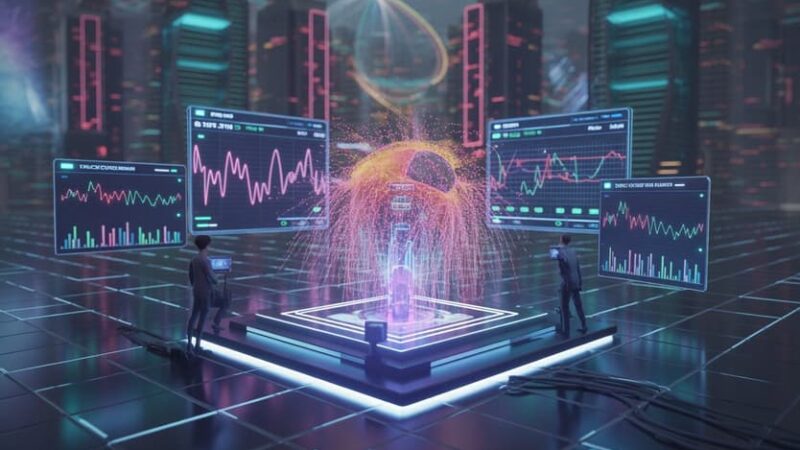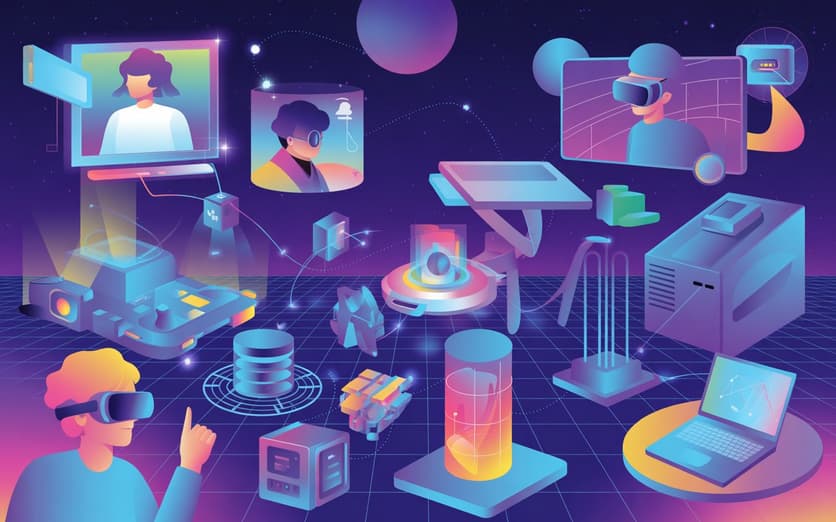
The concept of the metaverse has evolved from science fiction into a rapidly emerging digital reality, aiming to revolutionize how humans interact, work, and socialize. At its core, the metaverse is a persistent, immersive, and interconnected virtual world that mirrors and enhances real-world experiences. Its success is not based solely on vision or creativity—it relies fundamentally on a robust stack of technologies that enable real-time interaction, scalable infrastructure, and seamless user experiences. These technologies work in tandem to simulate presence, ownership, and continuity across virtual environments, ensuring that users can engage meaningfully within these digital realms.
As major tech companies, startups, and developers invest heavily in metaverse initiatives, understanding the key technologies driving this ecosystem becomes critical. Each successful metaverse platform—whether for gaming, enterprise collaboration, education, or entertainment—relies on a convergence of advanced solutions including virtual reality, blockchain, artificial intelligence, and real-time 3D rendering. These pillars are not standalone components; rather, they form a tightly integrated framework that powers immersion, decentralization, scalability, and security. This article explores the core technological foundations that underpin any thriving metaverse, highlighting how each contributes to building a truly engaging and future-ready virtual world
Definition of the Metaverse
The metaverse is a collective, persistent, and immersive virtual environment where users can interact with each other and with digital content in real time. It blends elements of augmented reality (AR), virtual reality (VR), 3D worlds, social networking, blockchain, and digital economies to create a shared, interactive space that exists beyond traditional digital platforms. Unlike conventional websites or applications, the metaverse offers a continuous experience, where users can move seamlessly between environments, maintain consistent identities, and engage with both human and AI-driven entities.
Rather than being a single platform, the metaverse is a network of interconnected digital spaces that may be accessed via various devices—VR headsets, AR glasses, mobile phones, or traditional computers. These environments often support user-generated content, customizable avatars, virtual assets, and real-world economic interactions through cryptocurrency or digital tokens. The goal of the metaverse is to simulate the richness of the physical world while unlocking new modes of communication, collaboration, and commerce in a fully digital space.
Key Features of the Metaverse
The metaverse is defined by a unique combination of features that distinguish it from traditional digital experiences. These core characteristics work together to create a fully immersive and persistent virtual environment:
Immersion
The metaverse offers a highly immersive experience through technologies like virtual reality (VR) and augmented reality (AR). Users can explore realistic 3D environments, interact with digital elements, and feel a strong sense of presence, making the virtual world feel tangible.
Persistence
Unlike games or apps that reset or reload, the metaverse is always active and continuous. Changes made by users or systems persist over time, whether or not a particular user is online, mirroring the consistency of the real world.
Interoperability
The metaverse is designed to be interoperable, meaning users can move assets, identities, and experiences across different platforms and environments. This requires adherence to open standards and shared protocols, enabling a unified digital ecosystem.
Real-Time Interaction
Users in the metaverse can interact with others and the environment in real time. This includes voice, gestures, and object manipulation, which fosters natural communication and collaborative activities.
User-Generated Content
A critical aspect of the metaverse is its support for user-generated content (UGC). Participants can create, trade, and own virtual objects, environments, and experiences, encouraging creativity and economic participation.
Digital Ownership
Enabled by blockchain technology, users can truly own virtual items, land, avatars, and assets through non-fungible tokens (NFTs). This promotes a decentralized economy and ensures verifiable ownership rights.
Economy and Monetization
The metaverse supports its own digital economy, including virtual marketplaces, cryptocurrencies, and play-to-earn models. Users can buy, sell, trade, and earn income from virtual goods and services.
Social Presence
The metaverse is inherently social, enabling people to meet, interact, work, and play together in shared spaces using avatars. This promotes a strong sense of community and co-presence.
Key Technologies Used for a Successful Metaverse
A fully functioning and scalable metaverse relies on the seamless integration of multiple advanced technologies. These technologies form the backbone of immersive experiences, decentralization, real-time interaction, and economic activity in virtual worlds.
| Technology | Function in the Metaverse | Examples/Tools |
| Virtual & Augmented Reality (VR/AR) | Delivers immersive and interactive 3D environments | Meta Quest, HTC Vive, AR glasses |
| Blockchain | Enables decentralized ownership, transactions, and identity | Ethereum, Polygon, Smart Contracts, NFTs |
| Artificial Intelligence (AI) | Powers NPCs, personalization, moderation, and adaptive experiences | Chatbots, AI moderation, recommendation engines |
| 3D Modeling & Game Engines | Creates realistic environments, avatars, and interactions | Unity, Unreal Engine, Blender |
| Cloud & Edge Computing | Supports real-time processing, scalable environments, and accessibility | AWS, Microsoft Azure, Google Cloud |
| Internet of Things (IoT) | Integrates real-world data and devices into the virtual environment | Wearables, smart home sensors |
| Networking (5G and beyond) | Provides fast, low-latency connectivity for real-time interaction | 5G networks, fiber internet, edge servers |
| Human-Computer Interfaces (HCI) | Enhances interaction via natural input like gestures, voice, and touch | Haptic gloves, motion sensors, BCIs |
| Cybersecurity | Secures user data, assets, and identity within the metaverse | Encryption, biometrics, zero-trust systems |
Future in Metaverse Tech
The future of metaverse technology is poised to bring even deeper integration between the digital and physical worlds, with innovations aimed at enhancing immersion, scalability, and realism. One of the most promising areas is advanced human-computer interaction, particularly brain-computer interfaces (BCIs). Companies like Neuralink are developing systems that will allow users to control virtual environments using thought alone, removing traditional input devices altogether. In parallel, haptic technologies are evolving to simulate touch, texture, and resistance in virtual spaces, making interactions far more lifelike.
Another major trend is the rise of interoperable and decentralized ecosystems. Future metaverses are expected to operate across multiple platforms, devices, and realities using open standards, allowing users to carry assets, identities, and experiences across digital boundaries. This shift will be driven by Web3 protocols, cross-chain blockchain systems, and digital identity frameworks. Additionally, generative AI will play a critical role in automating the creation of dynamic environments, realistic avatars, and intelligent behaviors, significantly lowering the barrier to entry for both users and developers. Together, these advancements suggest that the metaverse will transition from an experimental frontier into a central pillar of everyday digital life.
Conclusion
The metaverse is more than a visionary concept—it is a technological ecosystem built on the convergence of multiple advanced solutions. From virtual and augmented reality that drive immersive experiences, to blockchain technology that guarantees digital ownership and decentralized control, each component plays a vital role in creating seamless, interactive, and scalable virtual environments. Technologies like artificial intelligence, 3D engines, cloud computing, and human-computer interfaces collectively shape how users interact, create, and transact within these digital worlds.
As the metaverse continues to evolve, the synergy between these technologies will determine its long-term success. Future developments will focus on improving realism, interoperability, and user accessibility, ultimately transforming how we live, work, learn, and socialize online. Understanding these core technologies is essential not only for developers and businesses but also for users who seek to engage meaningfully in the next generation of digital experiences. The metaverse is not a single platform—it is a technology-driven transformation, and its success hinges on continuous innovation across every layer of its foundation.